

 Click the left links to find technical parameters
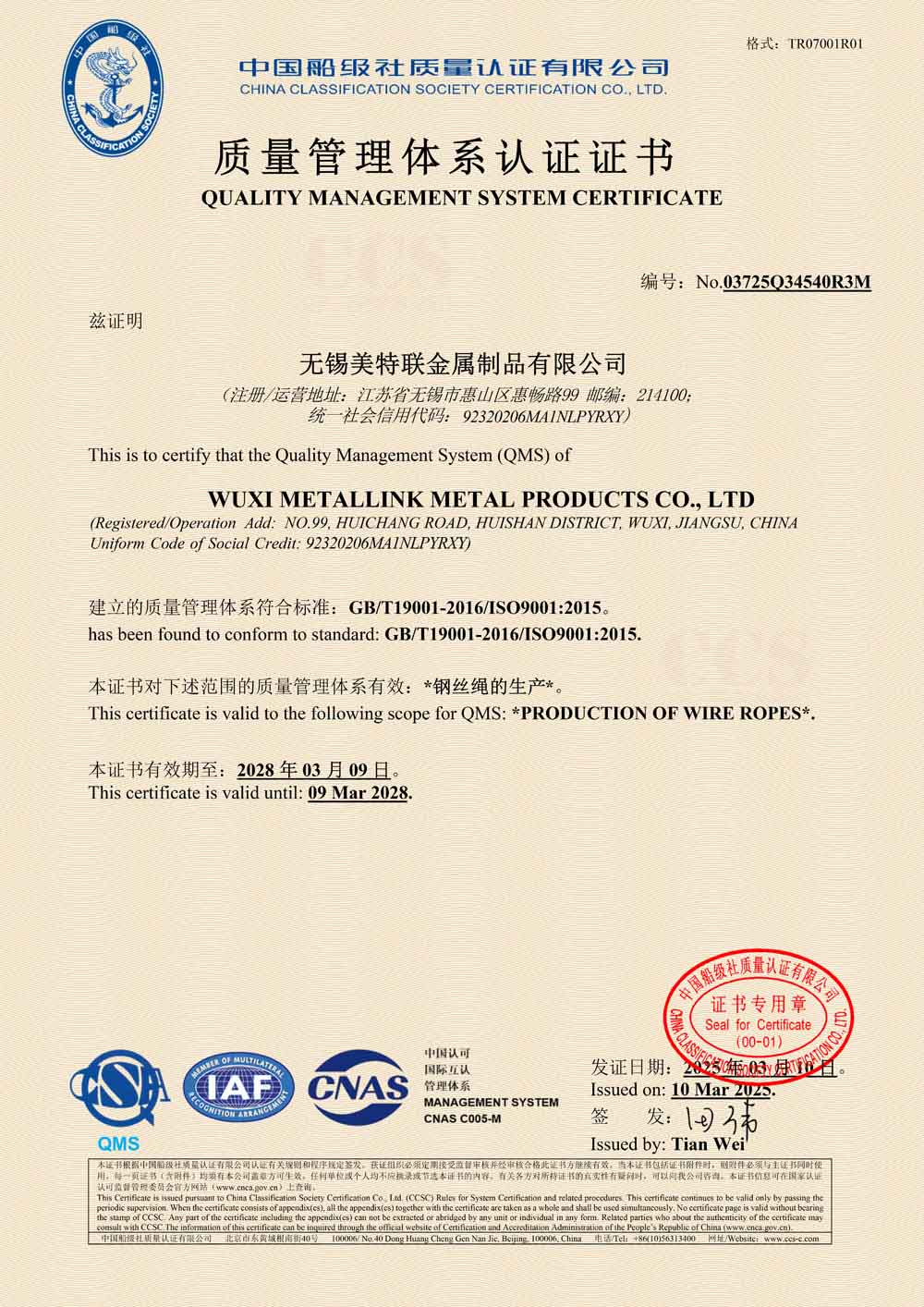
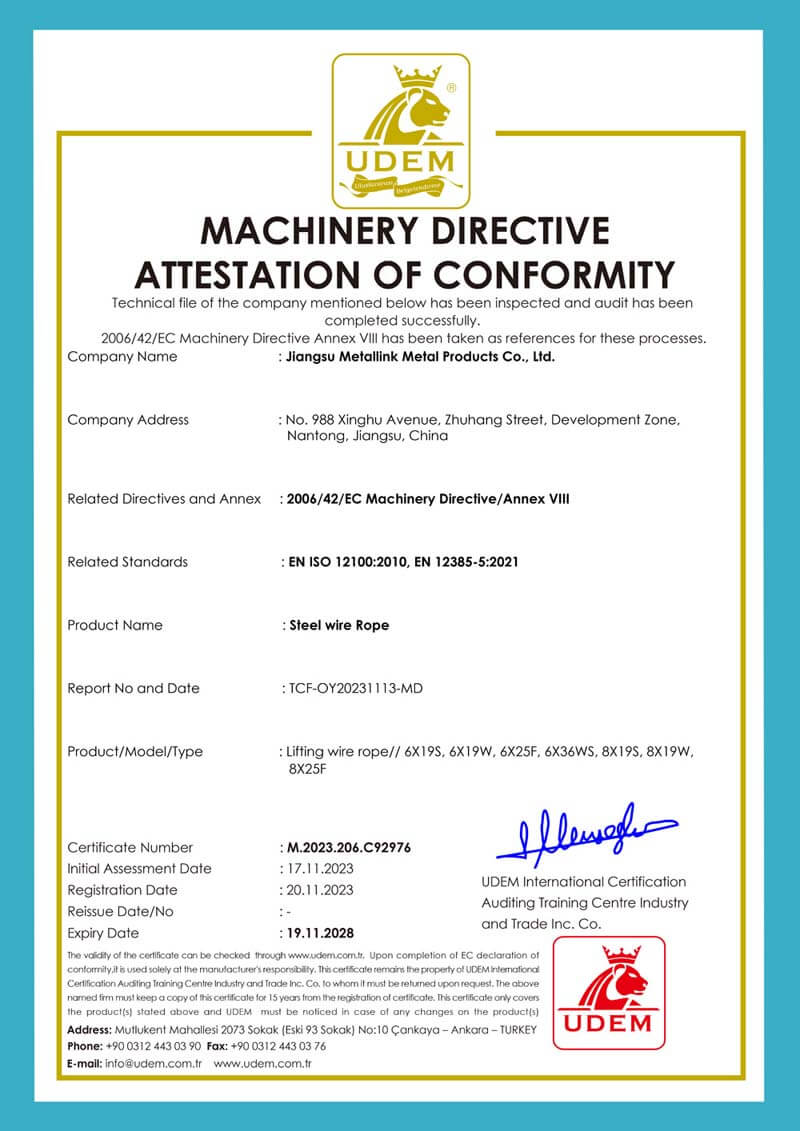
For elevator wire rope, we supply traction ropes with NFC, IWRC, CSC cores and over-speed governor ropes with SFC and WSC cores. Products comply with GB 8903, ISO 4344, EN 12385-5 and JIS G3525 standards with good quality and long service life.
Unlike single-brand suppliers, we can offer customers flexible sourcing options to fit different project requirements:
● Cost-effective elevator ropes for the maintenance market of elevators.
● High-end elevator ropes, reliable alternatives to original ropes of Mitsubishi, Fujitec, Schindler, TKE, OTIS, KONE, HITACHI, TOSHIBA etc.
Download the catalog of elevator ropes
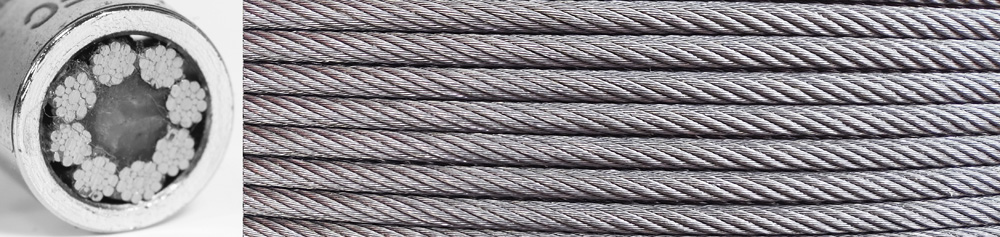
Attention that the reference price of cost-effective elevator ropes below is valid when total quanity of one order ≥ 1×20ft container. The final unit price is subject to the official offer provided by the salesperson.
| Rope construction | DIA. | FOB unit price (USD/m) |
| 8×19W-IWRC(7×7) | 6.5mm | 0.328 |
| 8×19W-IWRC(8×7+1×19W) | 6.5mm | 0.500 |
| 8×19S-NFC | 8mm | 0.342 |
| 9.53mm | 0.484 | |
| 10mm | 0.508 | |
| 11mm | 0.614 | |
| 12mm | 0.658 | |
| 12.7mm | 0.736 | |
| 13mm | 0.772 | |
| 16mm | 1.143 | |
| 8×19S-IWRC | 8mm | 0.456 |
| 10mm | 0.656 | |
| 12mm | 0.909 | |
| 13mm | 1.067 |


Click here if the video below fails to play
Fiber core (FC): typically made of sisal or synthetic fibers. It has good flexibility and high oil content, acting like a "mini oil depot" to store lubricating oil, making it suitable for normal environments. Elevator traction ropes usually use sisal cores, while elevator over-speed governor ropes typically use synthetic fiber cores(pp).
Steel core (IWRC): offers high structural stability and minimum breaking load. It is more stable when subjected to sheave groove compression, making it suitable for high-rise, high-speed elevator traction ropes.
Composite steel core (CSC): offers high structural stability and minimum breaking load, more flexible and better oil storage performance than IWRC, making it suitable for high-rise, high-speed elevator traction ropes.
In most of cases, during elevator maintenance, it is sufficient to select the same type of steel wire rope as previously used.
| rope construction | elevator lifting speed | elevator traveling height |
| 8×19S-FC | ≤ 2.0 m/s | ≤80 m |
| 8×19S-IWRC | ≤ 4.0 m/s | ≤ 200 m |
| 8×19S-CSC | ≤ 4.0 m/s | ≤ 200 m |
| 9×19S-IWRC | > 4.0 m/s | > 200 m |
| 9×19S-CSC | > 4.0 m/s | > 200 m |
European and American elevator manufacturers typically use 1370/1770, 1570, and 1570/1770 for elevator traction ropes.1770 is commonly used for elevator over-speed governors.
Japanese and Korean elevator manufacturers typically use 1620/1770 and 1620(grade A) for elevator traction ropes. 1320/1620(grade E) and 1320/1770 are commonly used for elevator over-speed governors.
For elevator traction ropes with fiber core, the ratio of the traction sheave diameter to the steel wire rope diameter should generally be ≥40.
For elevator traction ropes with steel core or composite steel core, the ratio should generally be ≥45.
A smaller drawer diameter ratio will cause excessive bending of the wire rope, leading to a sharp reduction in its fatigue life.
Nominal diameter:
Generally, a minimum of 8mm is required to ensure the foundation's load-bearing capacity.
For villa elevators or machine-room-less elevators, a minimum of 6mm is generally required.